Tomorrow, the AI companies are going to release a new model that can write perfect songs.
And I mean perfect. Like, every song is as good as “Good Vibrations,” or “Yesterday,” or “Three-Second Rule.”
You can use the new model — we’ll call it SongAInus — to write music that is just as good as the best song you’ve ever written.
You do this through natural language inputs: You just tell SongAInus what you want, and it delivers in seconds.
What makes this model special is that it’s trained on you. You connect it to your email, socials, and all of that stuff — don’t worry, it’s a seamless process that only requires one drop of blood — and it’s able to go through everything you’ve ever written in seconds.
Every drunk late-night text you sent to an ex, every heartfelt argument you ever got into on Reddit, all the poems you wrote for your dead dog. Everything you’ve ever written with any semblance of emotion in it.
It uses all of that knowledge to perfectly mimic your voice, style, and tone.
It knows exactly how you feel about love, so when you ask it to “write a love song,” it nails it. It shows you the exact words that you’d use if you sat staring at a blank page for hours, and it puts them into a melody that’s both wholly unique and exactly what you’d have written, if you’d just had the time to write it.
SongAInus is going to change the world. It’s absolutely perfect in every way, and it makes creativity effortless without removing the “you” from the equation.
That is why it is total dogshit.
Okay, there are problems with that hypothetical. Generative AI will never create something unique (at least, in the way that we generally mean unique when we discuss art), because it’s fundamentally built to be reductive; it presents you with the most likely solution to your prompt, and averages are, by nature, unremarkable.
And if SongAInus was truly trained on content that you created, it wouldn’t be able to differentiate between beautiful poetry and the essay you wrote for your Intro to Philosophy class while high on bath salts. “WHY I AM ACTUALLY PLATO AND FUCK YOU” would be treated with the same gravitas as your best art, which would skew the output.
But I want the hypothetical to be as compelling as possible. Even if you’re vigilantly anti-AI, you have to admit that you’d at least try a model that promised to create perfect art instantly, matched to your exact style.
So we’re going to maintain that SongAInus is real, and that it does everything that it promises. Why, then, is it dogshit?
Ah, well…I’m not sure. Let’s digress completely.
Maybe I can remember my point after I listen to a few songs.
I’ve been listening to the Rolling Stones a lot lately. I know, I’m such a rebel.
My father’s a huge Stones fan, so I’ve got a pretty in-depth knowledge of their oeuvre. That’s actually really important if you get into the Stones; the stories behind the songs can add new layers.
The best vocal performance in any Rolling Stones song does not belong to Mick Jagger. It’s Merry Clayton’s solo in the middle of “Gimme Shelter,” and this is not a radical opinion.
Merry Clayton was a session singer in the ‘60s. One night at around midnight, she got a call; the Rolling Stones wanted her to come in and do a vocal take, right now. She hung up the phone, got out of bed, and headed to the Los Angeles studio. When she arrived, she still had rollers in her hair.
Merry Clayton was not the Stones’ first choice. She was simply available.
In the recording, her voice cracks on almost the first big note. Mick Jagger shouts “Whoa!,” which you can hear in the background. But they kept the take going, and she belts the fuck out.
Here it is. If you’re impatient, skip to 2:40 to hear Merry come in.
Merry Clayton was four months pregnant when she recorded this. She went home and had a miscarriage, which some have attributed to the strain of the session.
There are other stories about this recording; Keith Richards’ guitar neck fell apart after hitting the last note, which you can also hear on the original take. There are also some tuning issues and what-not, but it’s not crazy to say that this is the best song in the Rolling Stones’ now-six-decade-plus career.
Enough about the Rolling Stones.
I want to hear some Neil Young instead. Here’s a track called “Mellow My Mind.”
When I played this for my bandmates in brotherfather, their reaction (and I’m paraphrasing here) was whoa, Neil Young sounds like shit.
This is from the album Tonight’s the Night, and it’s not an outlier on the album in that sense. Everything is loose, loud, and occasionally out of tune. It does sound like shit.
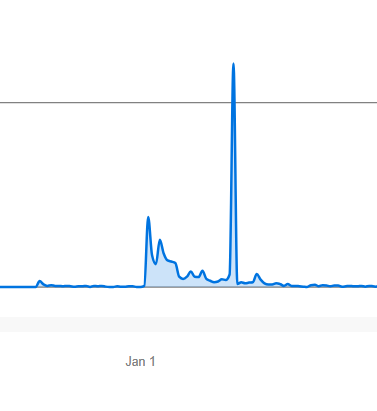
Here’s the critical consensus for Tonight’s The Night.

The record is about Danny Whitten, who played guitar in Crazy Horse, and Bruce Berry, a roadie. Both died of drug overdoses before the sessions started. Young became withdrawn and depressed, but he also became a workhorse, pushing through sessions even when his voice became too sore to sing.
You might have noticed that he utterly fails to hit one of the notes on “Mellow My Mind,” around 1:07. Here’s what the drummer Ralph Molina says about that moment.
“I still get chills when it gets to that fuckin’ note. It’s so real. I’ll tell ya, man, Neil was right there with us. He was wide open.”
And as for the bare quality of the mix, that was intentional, too. Here’s Neil Young talking about it:
“Those mixes were a little unorthodox. Like, it’s real music. Sometimes I’d be on mic and sometimes I’d be two feet off it. Sometimes I’d be lookin’ around the room and singin’ back off mic … we’d have to bring it way back up in the mix to get it. And you can hear the echo in the room.”
Huh, this kind of seems like it relates to the AI stuff.
“Yeah, we get it,” you’re saying. “Music isn’t about perfection, and a perfect AI writer would be imperfect for that reason.”
That is true, but it’s not the point I’m trying to make here.
Because you could tell an AI to make the singer’s voice crack when it hits an emotional moment. Remember, SongAInus is perfect, so if it knew that you liked music that uses unorthodox mixing techniques, it would do that.
We’re going to pretend that it’s 100% capable of creating either of those recordings.
If SongAInus created those moments, they would mean nothing.
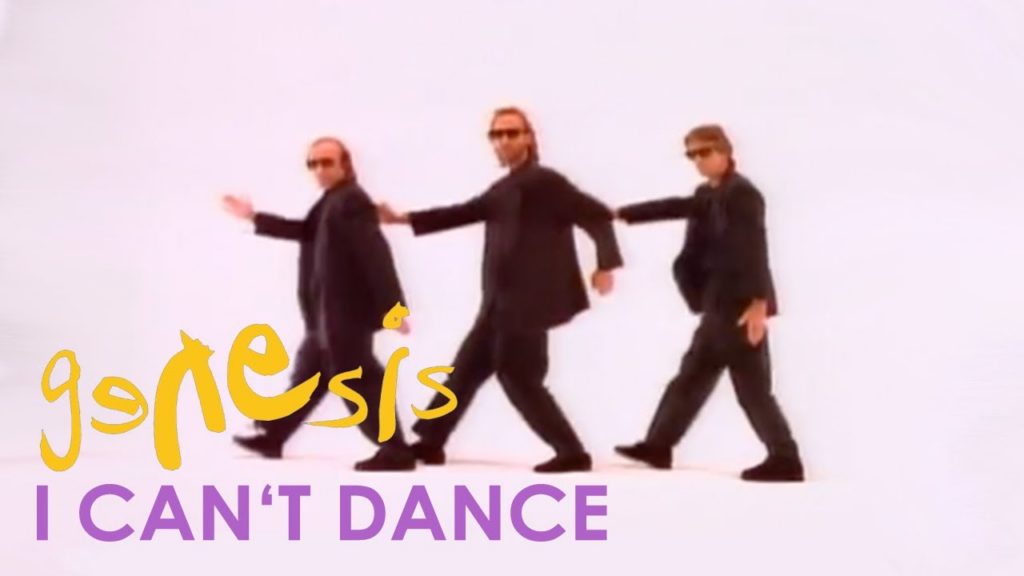
Neil Young’s Tonight’s The Night is universally considered to be a great album, but not because it was so brave to make a record that sounds like shit. Genesis had already done that with From Genesis to Revelation.
It’s a great album because Neil Young sat down in a time of grief and worked to express that grief. The out-of-tune vocals aren’t great because they’re vulnerable, they’re great because they’re honest; that’s why Molina said he was “wide open.”
The weird vocals and shambling guitars are part of an arrangement of deeply uncomfortable moments that lead you to feel like you are also grieving these losses.
To put that another way: Everything sounds like shit because everything felt like shit.
His voice was tired, he was drunk on tequila, and his band was suddenly diminished through the loss of a member. He recorded for months, but he didn’t choose the most technically perfect takes; he released the takes that matched the feeling of the songs, regardless of whether there was good gain staging or mic placement or whateverthefuck.
SongAInus can make this exact recording.
It’s perfect, remember? It’s capable of making “Mellow My Mind.”
But if it did, none of that stuff would be true; there would be no grieving Neil Young chucking tequila bottles into the corner and angrily agreeing to one more take before Joni Mitchell showed up (hopefully not in blackface). There would be no reason behind the strained vocals, so as a listener, it’d be difficult to assign them any gravitas.
With “Gimme Shelter,” there would be no reason to keep the take of Merry Clayton’s voice cracking. At the very least, you’d want to edit out Mick Jagger’s reaction to the flub; without the story, there’s no reason to keep that moment in place.
These moments are not just great because of the stories.
They’re great because the entire point of art is the difficult, messy, painful process of making art.
We don’t have to know the stories to appreciate this. I don’t know anything at all about Eddie Van Halen, but when I hear “Eruption,” I hear a kid who spent every weeknight in his room playing guitar for hours and hours until he surpassed his teachers. I can hear that he started with a couple of barre chords and ended in a place where he’d created entirely new ways to play the instrument.
I can hear the energy that powers a mind like that. I can hear the electricity in his heart. And I don’t even like “Eruption.”
SongAInus could make that song in a couple of seconds. No long nights of practicing, no cancelled dates to work on scales, no hardships whatsoever.
And no point. The SongAInus version removes the process of creation, so it removes the entire purpose of the piece.
“Streamlining creativity” is an oxymoron.
I am horrified to see good artists miss this point. They are tempted by AI because it removes the anguish of starting at a blank page; that blank page is where the magic of art lives.
I get it, in one sense. Art is frustrating, and for most people, it’s more frustrating than rewarding. I can spend years creating a record, and it’ll get a handful of streams per month (which means it pays absolutely nothing, per Spotify’s new rules).
But we do not create art to impress other people. We don’t do it for money. Humans create art because the process is fulfilling, and it teaches us something about ourselves.
I have heard about recording studios using AI to map out parts for songs.
The AI doesn’t make the final recording , of course — it’s just to see how it would sound with strings, background singers, and so on.
I find this to be abhorrent and artistically indefensible. It is offensive to anyone who’s ever worked to create something with actual emotion behind it.
If AI existed in Los Angeles in 1969 and the producers were dumb enough to use it, Merry Clayton wouldn’t have gotten the call.
Ah, you might say, but then she might not have had the miscarriage. And Neil Young could’ve saved himself the pain of vocal strain if he’d been able to skip a few of the sessions; maybe if he wasn’t working so hard, he’d have gotten sober a few years earlier.
AI does make things easier. But Merry Clayton is still creating music, as is Neil Young. They understand that the pain of the process is what makes the process worth doing.
This is the fundamental difference between AI and every other music technology.
Other music technologies have made non-creative processes easier. Producers can use synthesizers, for example, to plan parts (or replace session musicians entirely, if the song works with a certain synth voice). They still need to think about where each note goes.
Production software has made recording much more accessible; it’s the reason that I’m able to record my music. I still need to write the songs.
But AI is the only technology that promises to wholly remove the process of creation. And if you believe that you are a creative person, you should see that promise for exactly what it is: dogshit.
We must encounter pain and frustration if we want to be creators.
And I don’t mean “content creators,” because I’m not talking about a career here. I don’t want to diminish art by associating it with financial success.
Art lets us communicate our emotions to other people. It allows us to learn about ourselves. It is through the process of that creation that we achieve those goals.
I know that this is not the first essay to make this point. We “anti-AI” people have been adamant about this — and if you’re pro-AI, you might see us as overly sensitive Pollyannas.
We are like this because this technology is deeply insulting to anyone who understands the value of art. It solves a problem that doesn’t exist, and in doing so, it’s tricking a generation of people into the mistaken belief that things that are difficult are not worth doing.
I will close this with a letter that Kurt Vonnegut sent to a group of high school students in 2006.
The students sent letters to a bunch of authors to try to persuade them to come to the school, but Vonnegut was the only one to respond. Here it is in its entirety (and you can find more background info on this blog):
Dear Xavier High School, and Ms. Lockwood, and Messrs Perin, McFeely, Batten, Maurer and Congiusta:
I thank you for your friendly letters. You sure know how to cheer up a really old geezer (84) in his sunset years. I don’t make public appearances any more because I now resemble nothing so much as an iguana.
What I had to say to you, moreover, would not take long, to wit: Practice any art, music, singing, dancing, acting, drawing, painting, sculpting, poetry, fiction, essays, reportage, no matter how well or badly, not to get money and fame, but to experience becoming, to find out what’s inside you, to make your soul grow.
Seriously! I mean starting right now, do art and do it for the rest of your lives. Draw a funny or nice picture of Ms. Lockwood, and give it to her. Dance home after school, and sing in the shower and on and on. Make a face in your mashed potatoes. Pretend you’re Count Dracula.
Here’s an assignment for tonight, and I hope Ms. Lockwood will flunk you if you don’t do it: Write a six line poem, about anything, but rhymed. No fair tennis without a net. Make it as good as you possibly can. But don’t tell anybody what you’re doing. Don’t show it or recite it to anybody, not even your girlfriend or parents or whatever, or Ms. Lockwood. OK?
Tear it up into teeny-weeny pieces, and discard them into widely separated trash receptacles. You will find that you have already been gloriously rewarded for your poem. You have experienced becoming, learned a lot more about what’s inside you, and you have made your soul grow.
God bless you all!
Kurt Vonnegut
SongAInus could have written that letter, by the way. Then old Mr. Vonnegut would have had more time for his afternoon nap.
But what would be the point of that?